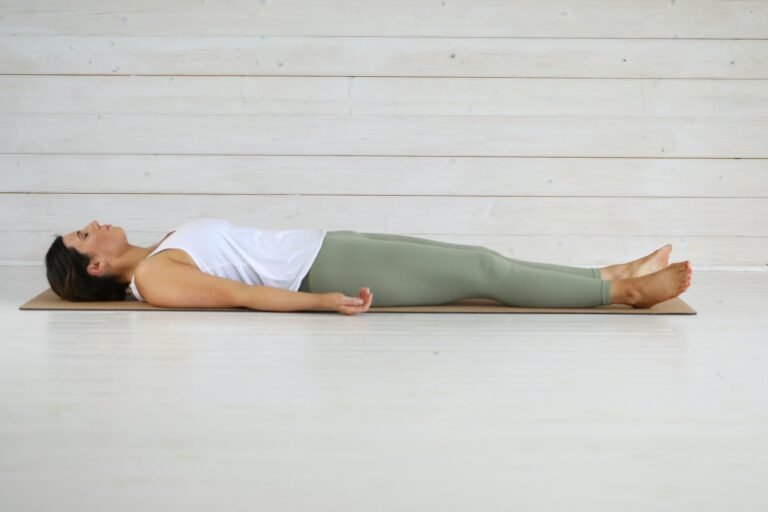
This is a question I find myself returning to again and again, because my own experience keeps complicating it. I have had what felt unambiguously like OBEs: the roll out of the body, the finding myself standing in my own bedroom, the quality of presence that feels different from a dream. And then the experience continues, and the dreaming quality re-enters, and I am no longer certain where one ended and the other began. Let’s explore together Lucid dreaming vs Out of Body experience.
The distinction between lucid dreaming and out-of-body experiences (OBEs) is one of the most debated questions in the consciousness research community, and one of the most genuinely uncertain in personal practice. Both involve conscious awareness during sleep or sleep-adjacent states. Both can be extraordinarily vivid. Both have inspired centuries of philosophical, spiritual, and scientific inquiry. And both, at their edges, merge into something that resists clean categorisation.
What follows is both what the research currently says and an honest account of where personal experience, in the territory where these states genuinely blur, does not always match the neat distinctions the literature attempts to draw.
Defining the terms
Lucid dreaming
A lucid dream is defined by one criterion: the dreamer becomes aware that they are dreaming whilst the dream is in progress. The environment may be entirely fantastical or entirely realistic. The dreamer may have varying degrees of control. What defines the lucid dream is the metacognitive recognition (‘this is a dream’) not the content or the setting.
Out-of-body experience (OBE)
An OBE is defined by a different criterion: the subjective experience of being located outside of the physical body, often accompanied by the sense of looking at the body from an external vantage point. OBEs can occur during sleep, during anaesthesia, during cardiac arrest, during meditation, and occasionally in apparently ordinary waking states. Sleep-related OBEs typically begin with a separation experience, like rolling, floating, or lifting out of the body, and frequently involve finding oneself in a representation of one’s own immediate physical environment: the bedroom, the house.
This is the experience I can describe from personal practice with some certainty: the classic onset of an OBE, the roll out, the bedroom. What the research and personal experience both confirm is what comes next, which is where things become more complicated.

What the research says about the relationship
A landmark 2024 review published in Sleep Medicine Reviews by Jalal et al., examining OBEs in relation to lucid dreaming and sleep paralysis, concluded that sleep-related OBEs, lucid dreams, and sleep paralysis may all emerge from the same underlying mechanism: the maintenance of conscious awareness during transitions from wakefulness to REM sleep. In the researchers’ proposed model, these three experiences form a spectrum, different expressions of what happens when consciousness is preserved at the threshold between waking and dreaming.
A graph analysis of dream reports comparing non-lucid dreams, lucid dreams, and OBE reports found that OBE reports showed a more condensed, coherent narrative structure than lucid dream reports. This is consistent with the subjective accounts of many practitioners: OBEs often have a quality of immediacy and groundedness that feels qualitatively different from the more fluid, mutable quality of a lucid dream.
Stephen LaBerge’s research at Stanford, and the work of Keith Hearne before him, placed both experiences firmly within REM sleep or the transitions in and out of it. The neurological infrastructure appears to be shared. The phenomenological experience diverges, at least at the point of onset.
The key distinctions: Lucid Dreaming vs Out of Body Experience
Lucid dream: recognition of the dream state; environment may be fantastical or realistic; the dreamer is a character within a dream world.
OBE onset: experience of leaving the physical body; immediate environment typically realistic (own bedroom); felt sense of presence in the physical world from a disembodied perspective.
Where they blur: OBEs beginning in the bedroom often transition into what is functionally indistinguishable from a lucid dream as the experience progresses. Research position: most sleep scientists treat OBEs as a variant of lucid dreaming or REM dissociation. Some consciousness researchers and practitioners maintain that the two are phenomenologically and perhaps ontologically distinct.
The practitioner’s honest account
From personal experience: the beginning of an OBE has a quality that I do not confuse with the beginning of a lucid dream. There is a vibrational quality to the onset, like a buzzing, an internal ringing sound, a vibrational state, a sense of density or pressure, and then the sensation of movement, of rolling or lifting, that is unlike anything in ordinary dreaming. Finding myself standing in my bedroom, observing it with the quality of felt reality rather than dream logic, is a distinct experience.

But then the experience continues. And the question of what it is (OBE or lucid dream) becomes increasingly difficult to answer with confidence. The environment may shift and the dreamlike quality re-enters. Whether this represents a transition from one state to another, or evidence that the two were never fundamentally distinct in the first place, is something I hold as genuinely open.
Robert Waggoner, in his teaching, maintains that the distinction may ultimately be more semantic than experiential: both are forms of conscious awareness within an internally generated world, and the question of whether that world is ‘the real bedroom’ or ‘a dream of the bedroom’ may not be resolvable from within the experience itself.
What others say about the difference
William Buhlman, one of the most prolific writers on OBEs, maintains a strong distinction: OBEs occur in a non-physical reality that is more immediate and coherent than the dream space, and the separation from the physical body is a distinct and recognisable event. For Buhlman, conflating OBEs with lucid dreams diminishes the significance of both.
My own position: the onset experience is real and distinct, whilst what follows is mixed. And I remain open to the possibility that this article will need updating as my practice develops, an honest acknowledgement that this is explored territory, not settled ground.
Exploring these states with guidance
If you are drawn to exploring the threshold between lucid dreaming and OBE, whether from curiosity, from a desire to work with consciousness more deliberately, or from a wish to understand experiences you have already been having, the Lucid Dreaming Hypnotherapy Programme and the 10 Days to Lucid Dreaming course at Lucid Mind Hypnotherapy are designed for exactly that. Both include work on navigating threshold states, including the transitional experiences of sleep paralysis onset and the boundary between the two states explored in this article. The free consultation is the natural starting point.
Work with Giorgia at Lucid Mind Hypnotherapy:
- Deep Sleep Hypnosis Programme: a personalised 5-session programme for chronic insomnia and sleep anxiety
- Lucid Dreaming with Hypnosis Programme: for those ready to explore conscious dreaming with clinical support
- 10 Days to Lucid Dreaming: an online self-guided course combining daily practice, audio, and technique
- For more courses and events always check my page.
- Get free resources here, including a Free Lucid Dreaming Starter Guide.